
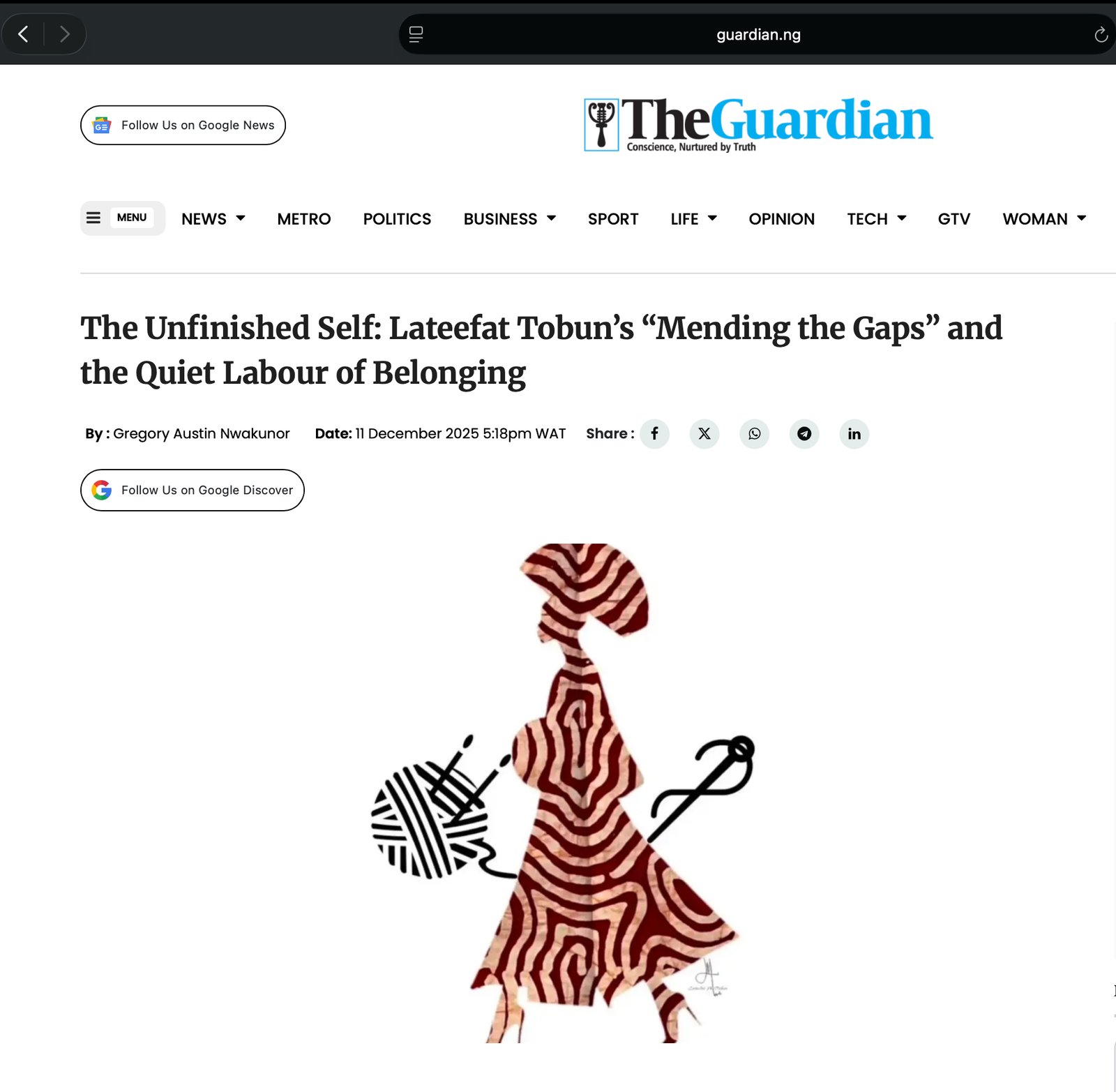
Published by The Guardian Nigeria, this critique by Gregory Austin Nwakunor examines Lateefat Tobun's Mending the Gaps through its restrained visual language and exploration of migration, belonging and repair.
Nwakunor focuses on the solitary figure, ball of yarn, oversized needle and expansive white space that structure the composition. He identifies the patterned body as one of the painting's strongest formal ideas, reading its shifting associations with textile, fingerprint, landscape and memory as a way of presenting identity as something shaped and made visible through experience.
The critique considers the separation between the figure, thread and needle as central to the work's metaphor of repair. Rather than presenting belonging as something completed, the painting leaves the act of stitching unresolved, allowing identity to remain unfinished, continually assembled and maintained.
Nwakunor also highlights the work's restraint and use of negative space, arguing that its limited visual vocabulary gives its symbols greater emotional and conceptual weight. At the same time, he identifies a tension in the work's lack of specificity, noting that the absence of a named place, face or individual history creates both universality and the possibility of vagueness.
Ultimately, the critique reads Mending the Gaps as less concerned with the drama of displacement than with what follows it: the continuing work of constructing a sense of self from inherited patterns, remembered places and experiences that remain unfinished.


